Built to deliver the complex
Safely & compliantly every time
The construction landscape has changed. The Building Safety Act 2022 raised the bar for every contractor working on higher-risk buildings, and rightly so. At Fortis Vision, we didn’t need to catch up – we were already there.
Our competency framework is embedded at every level of the business, from board level to site operative. It underpins how we plan, how we build, and who we work with.
The Building Safety Act – We know our responsibilities
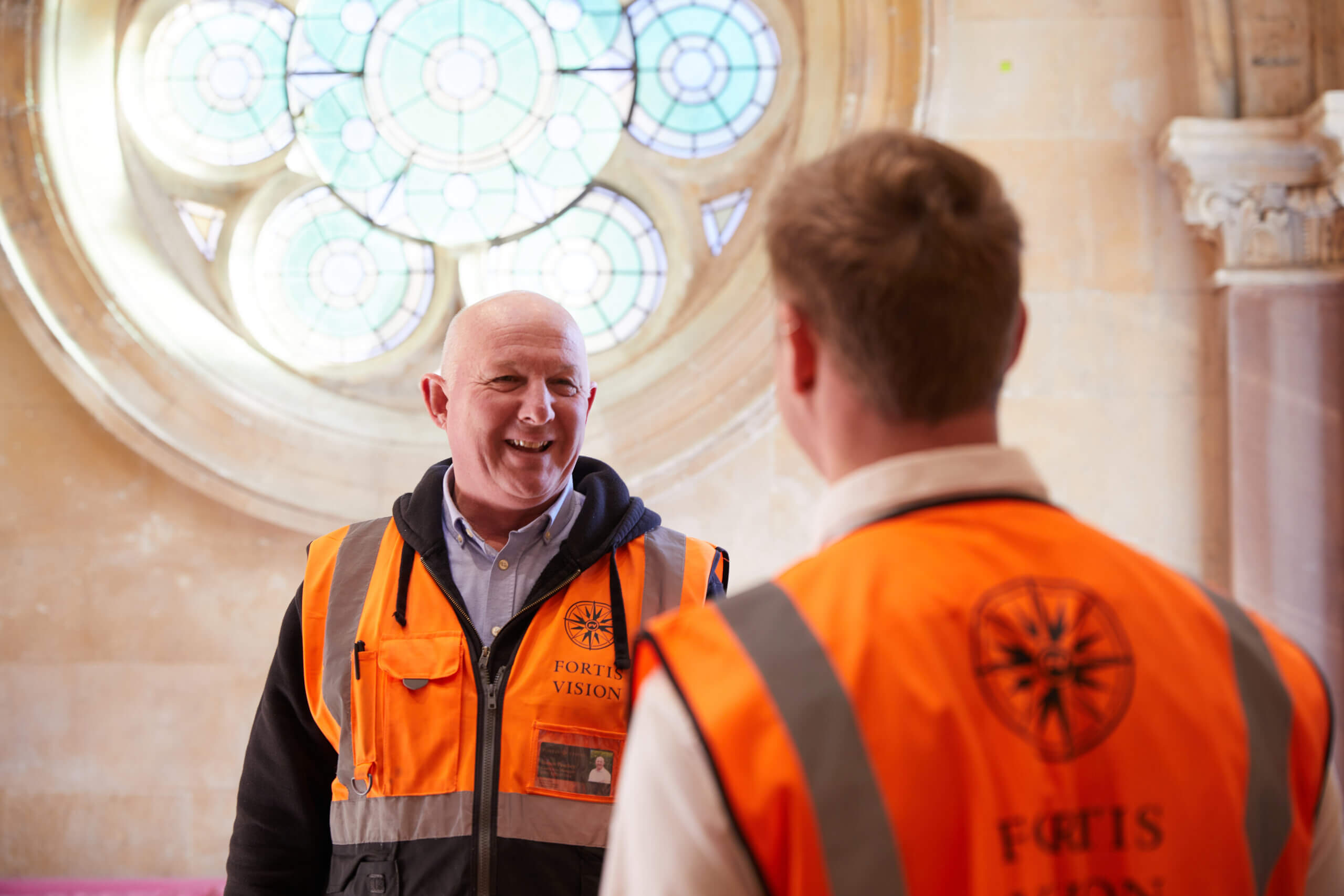
As a Principal Contractor on Higher-Risk Buildings (HRBs) projects, we understand the full weight of our duties under the Building Safety Act 2022. We hold Building a Safer Future Champion status and our teams are trained, qualified and experienced in navigating the regulatory gateways – from Gateway 2 pre-construction approval through to Gateway 3 completion and occupation.
We maintain the Golden Thread of information across every HRB project, using Procore as our common data environment. Every design change, inspection record, risk assessment, and compliance document is stored, versioned, and accessible to all duty holders in real time. Nothing is lost. Nothing is left to memory.
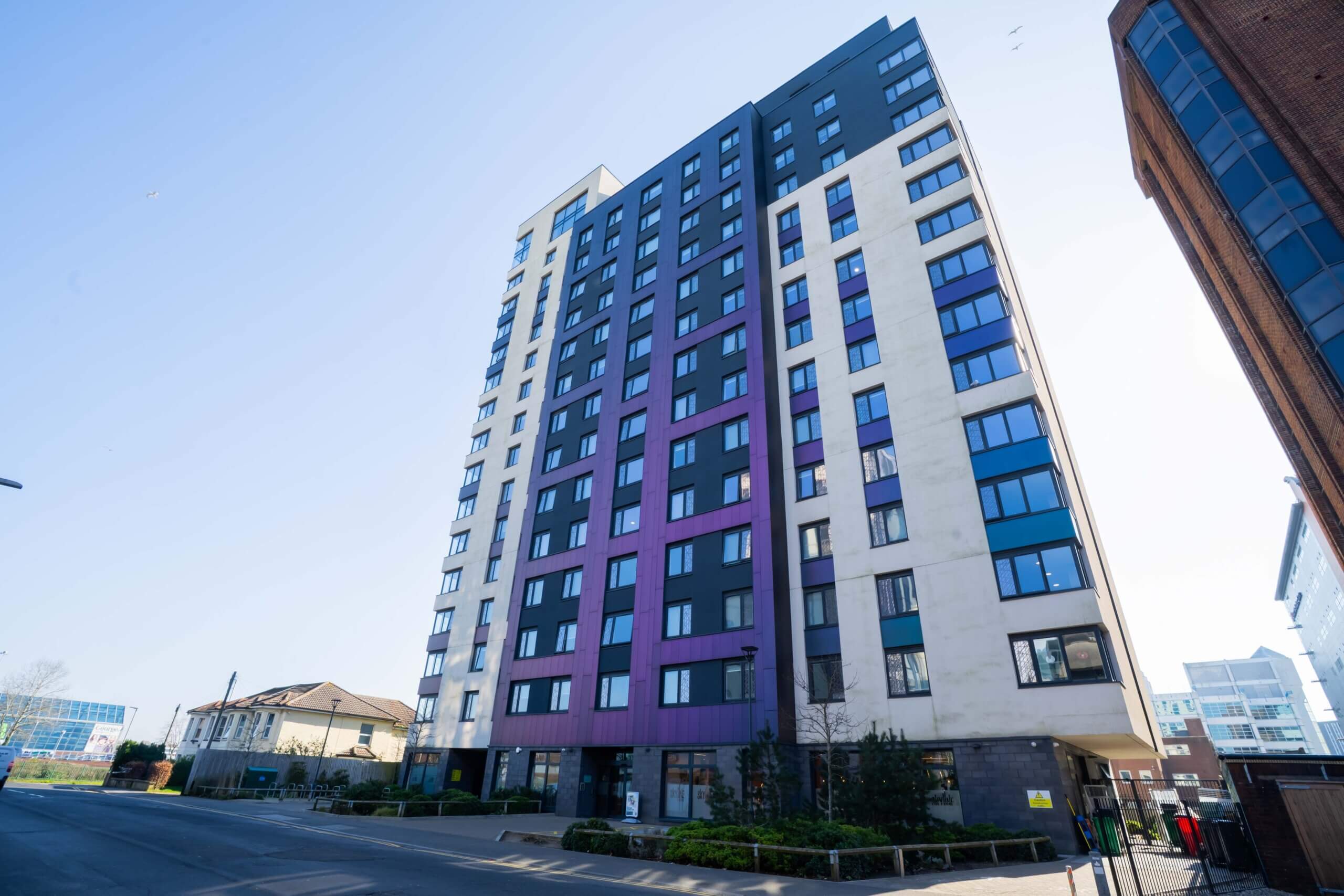
We have delivered the refurbishment of over 20,000 bedrooms in the PBSA sector, a significant proportion of which sit within buildings that meet the definition of a higher-risk building – 18 metres or seven storeys and above. This is not a new space for us. We have the experience, the systems, and the people to do it properly.
Our people are our competency
Competency isn’t a certificate on a wall. It is the collective knowledge, qualification, experience, and behaviour of every person on our team.
Our senior management hold degree-level or equivalent qualifications in construction and engineering disciplines. Our Project Managers and Senior Project Managers lead HRB projects with a thorough command of the Building Safety Act, CDM regulations, fire safety legislation, and the Golden Thread requirements. Our Site Managers hold SMSTS certification as standard, alongside CSCS cards and, where required, IOSH and NEBOSH qualifications.
Every individual working on an HRB project at Fortis Vision undergoes a competency assessment specific to that project before work begins. This is not a tick-box exercise. We assess skills, knowledge, experience, and behavioural traits in line with PAS 8671, PAS 8672, and BS 8670, and we keep those assessments current throughout the project lifecycle.

Working in live environments
It’s what we do
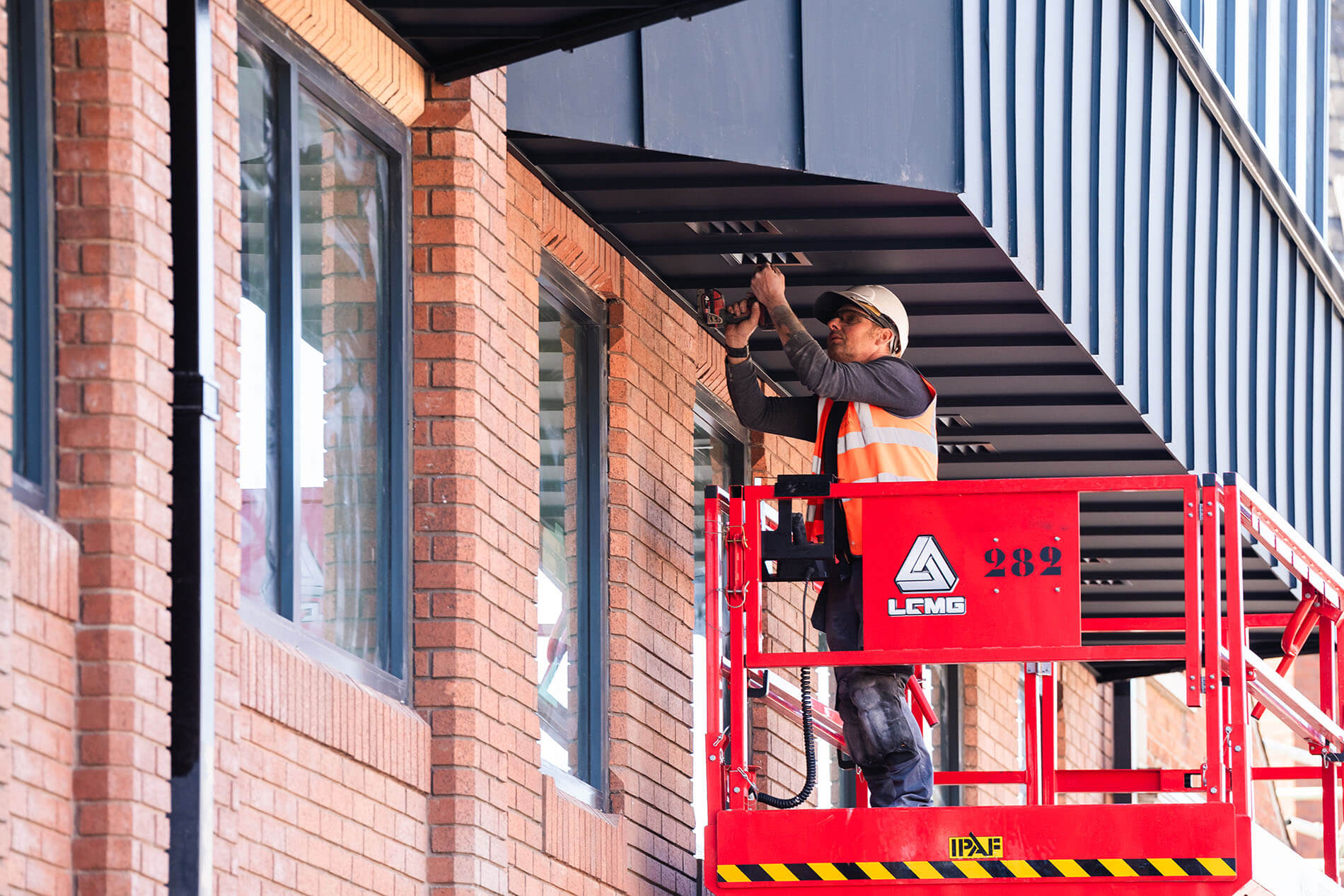
Many of our projects are carried out in occupied buildings, where residents are living and working around us. This requires a different kind of competency, one that goes beyond technical skill.
Our teams are trained to work sensitively, efficiently, and safely in live environments. We plan meticulously, segregate areas carefully, and communicate proactively with building managers, residents, and clients throughout. We understand the responsibilities that come with working in occupied higher-risk buildings and take them seriously.
A supply chain we stand behind
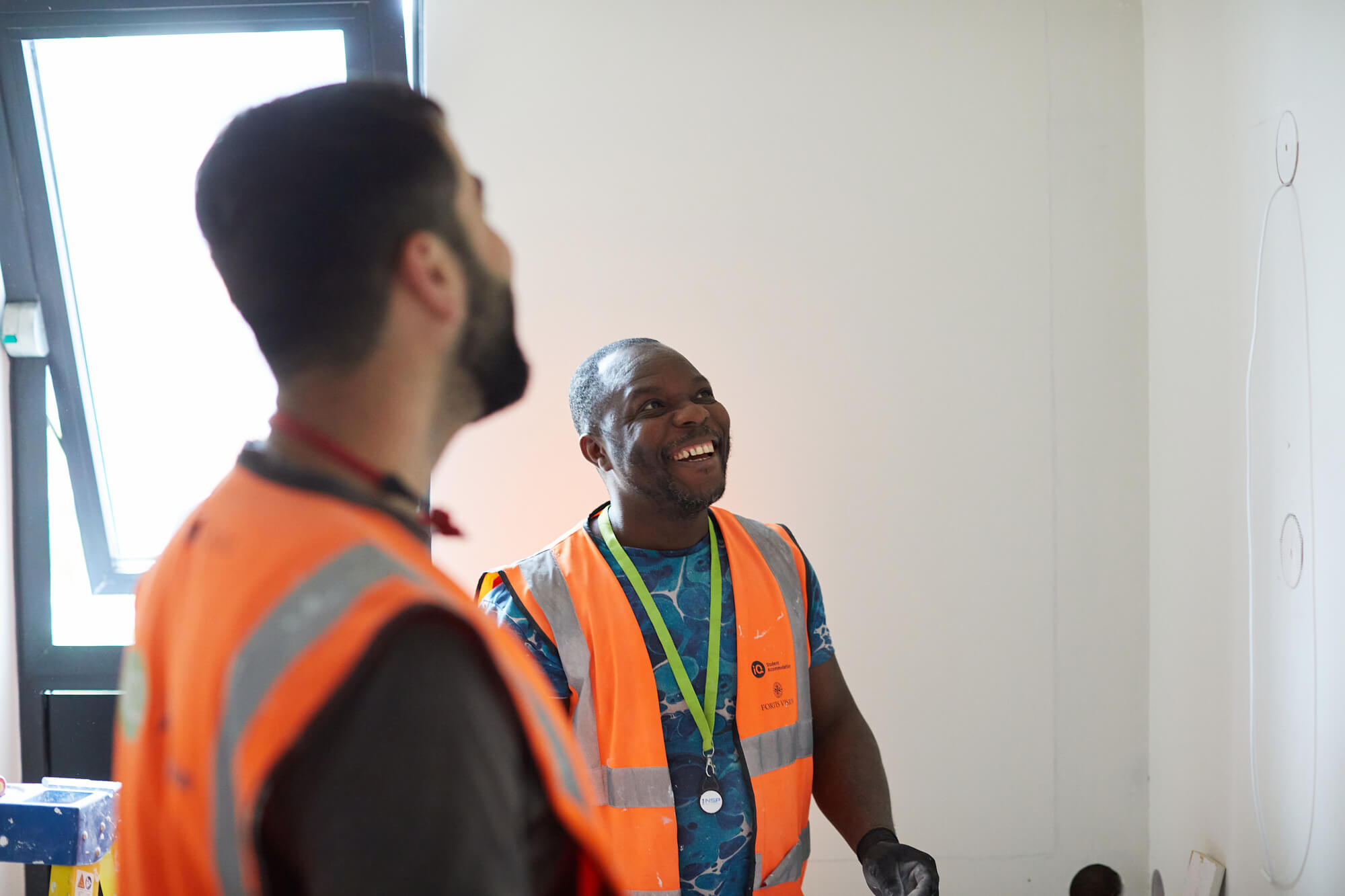
Our competency obligations don’t stop at our own team. Under the Building Safety Act, we are responsible for ensuring that every subcontractor and designer we appoint meets the required standard, and we take that responsibility seriously.
Before any appointment is made on an HRB project, our supply chain undergoes thorough pre-screening against BSA requirements, including review of qualifications, past project experience, and adherence to PAS 8671 and BS 8670 standards. We include contractual safeguards requiring adherence to Gateway requirements and the Golden Thread principle. We monitor performance throughout, and any concerns are escalated to Director level without exception.
We only work with people we trust, and trust is earned through demonstrated competence.
Quality built in, not bolted on
We hold ISO 9001, ISO 14001, and ISO 45001 certifications, and our quality procedures are applied consistently across every project regardless of scale or complexity.
On site, this means daily quality audits, contractor QC sheet sign-off, pre-delivery inspection of materials, and a strict non-conformance protocol, nothing is closed without proper review and documented resolution. Inspection and test plans (ITPs) are developed for all permanent work activities, with hold-points clearly defined for quality-critical elements. All quality assurance data is managed through Procore, forming part of the wider Golden Thread record.
Our commitment to quality is not about compliance for its own sake. It is about delivering buildings that are safe, that perform as designed, and that stand up to scrutiny, now and in the future.

Competencies FAQ’s
What is the Building Safety Act 2022 and how does it affect refurbishment contractors?
The Building Safety Act 2022 introduced a new regulatory framework for the design, construction, and management of buildings in England, with particularly stringent requirements for higher-risk buildings. For refurbishment contractors, it means formal duty holder appointments, mandatory competency assessments for all personnel and subcontractors, Gateway approvals before and after construction, and the ongoing maintenance of a Golden Thread of information. Fortis Vision operates fully within this framework as an appointed Principal Contractor on HRB projects, with the systems, training, and accreditations to evidence it.
What is a higher-risk building (HRB) and does Fortis Vision have experience working on them?
Under the Building Safety Act 2022, a higher-risk building is defined as a residential building of at least 18 metres in height or seven or more storeys. These buildings are subject to the most stringent safety requirements, including Gateway approvals by the Building Safety Regulator and enhanced competency obligations for all duty holders. Fortis Vision has extensive experience working on HRBs, including occupied PBSA projects and complex conversion projects. To date we have refurbished over 20,000 bedrooms in the PBSA sector, a significant number of which meet the HRB threshold.
How does Fortis Vision demonstrate contractor competency under the Building Safety Act?
Competency under the Building Safety Act is assessed across four dimensions: skills, knowledge, experience, and behaviour. At Fortis Vision, every individual working on an HRB project undergoes a project-specific competency assessment before work begins, aligned to PAS 8671, PAS 8672, and BS 8670. Our Project Managers hold relevant degree-level or NVQ Level 7 qualifications; our Site Managers hold SMSTS, CSCS, and where appropriate IOSH or NEBOSH certifications. We hold Building a Safer Future Champion status and are members of Constructionline Gold, CHAS, and SafeContractor.
What is the Golden Thread of information and how does Fortis Vision manage it?
The Golden Thread is a digital record of all safety-critical information relating to a building – covering design decisions, construction records, materials, risk assessments, and compliance documentation. Under the Building Safety Act, Principal Contractors are required to create and maintain it throughout the construction phase. Fortis Vision uses Procore as its Common Data Environment to manage the Golden Thread on every HRB project. All documents are version-controlled, accessible to all authorised duty holders in real time, and structured to support Gateway submissions and eventual handover to the Accountable Person.
Can Fortis Vision carry out refurbishment works in occupied buildings?t is the Golden Thread of information and how does Fortis Vision manage it?
Yes. In-occupation refurbishment is one of our core specialisms. We regularly carry out works in live student accommodation, care homes, hotels, and office environments where minimising disruption to residents and operations is critical. Our teams are trained to work sensitively within occupied buildings, with careful area segregation, controlled working hours where required, proactive communication with building managers and residents, and robust site management that prioritises the safety and comfort of those living or working around us.
How does Fortis Vision assess and manage its subcontractor supply chain?
We take full responsibility for the competency of our supply chain on every project. Prior to appointment on any HRB project, subcontractors are screened against Building Safety Act requirements – including review of qualifications, past project performance, and compliance with PAS 8671 and BS 8670. Contractual terms require adherence to Gateway requirements and the Golden Thread principle. We monitor subcontractor performance throughout the project, and any concerns regarding competency or compliance are escalated immediately to Director level.
What quality management certifications does Fortis Vision hold?
Fortis Vision holds ISO 9001 (Quality Management), ISO 14001 (Environmental Management), and ISO 45001 (Occupational Health and Safety Management) certifications. These are supported by accreditations including Constructionline Gold, CHAS, SafeContractor, Acclaim, EcoVadis, Cyber Essentials, and Considerate Constructors registration. Together, these provide clients with independent verification that our quality, safety, and environmental practices meet internationally recognised standards.
What is Fortis Vision’s approach to quality control on site?
Quality control at Fortis Vision is proactive, not reactive. On every project, designated personnel carry out daily site audits at random locations, with all findings logged in our Quality Control register. Subcontractors are required to submit their own QC sheets for review and approval before progressing to the next stage of works. Non-conformances are formally documented, tracked, and only closed once corrective action has been independently verified. Inspection and Test Plans are developed for all permanent works activities, and material deliveries are subject to pre-delivery inspection to confirm they meet specification before installation.
What is Procore and why does Fortis Vision use it?
Procore is a cloud-based construction management platform that Fortis Vision uses as its Common Data Environment across all projects. It gives all authorised project participants – clients, designers, subcontractors, and duty holders – real-time access to the most current project information, including drawings, specifications, risk assessments, inspection records, and change control logs. On higher-risk building projects, Procore forms the backbone of our Golden Thread management, ensuring that all safety-critical information is accurately maintained, version-controlled, and readily available for Gateway submissions and regulatory audit.
What does Building a Safer Future Champion status mean?
Building a Safer Future (BSF) is an industry-led initiative driving culture change in construction in response to the Grenfell Tower tragedy and the subsequent regulatory reforms. Champion status is awarded to organisations that demonstrate a genuine, evidenced commitment to building safety – not just compliance, but culture. Fortis Vision holds BSF Champion status, reflecting our commitment to safety-first working practices, ongoing staff training, transparent stakeholder engagement, and continuous improvement in how we deliver and manage buildings.

Always with Safety & Compliance First
Fortis Vision takes pride in its various accreditations and certifications. These include three ISO Accreditations 9001:2015 (QMS) ISO 14001:2015 (EMS) and ISO 45001:2018 (OH&S) as well as EcoVadis (Environment, Labour and Human Rights, Ethics and Sustainable Procurement), CHAS, Constructionline Gold and SafeContractor.









These accreditations verify the quality of our work and demonstrate that we have sound financial, administrative, operational and oversight practices, giving you complete peace of mind.
Let’s make
something special
"*" indicates required fields
Sign up to our newsletter
"*" indicates required fields